
The Thyroid and Omega-3 Fatty Acids: Enhancing Cellular Receptor Sensitivity
It is common to feel frustrated when you’re doing everything right—you’ve got your diet mostly sorted, you’re trying to manage your stress, but you still feel like your thyroid medication or even your natural T3 isn’t quite getting into your cells.
You may feel exhausted, brain-fogged, and like your metabolism has decided to go on a very long vacation.
The answer is often, “Yes, my love, it probably is [connected to your thyroid],” but not in the way you think.
The issue might not be the amount of hormone, but whether your cell's "front door" is actually open to receive the message.
This is where Omega-3 Fatty Acids come in as essential gatekeepers of cellular communication
What are the Thyroid and Omega-3 Fatty Acids
The term "The Thyroid and Omega-3 Fatty Acids" refers to the interdependent relationship between the thyroid and essential fatty acids, focusing on how Omega-3s support the cellular infrastructure required for thyroid hormone action.
Core definition: Omega-3 fatty acids, specifically Eicosapentaenoic Acid (EPA) and Docosahexaenoic Acid (DHA), are polyunsaturated fats our body cannot efficiently make and must be consumed.
Thyroid connection: Omega-3s are foundational to the fluidity and structure of the cell membrane, which is the physical barrier where thyroid hormone receptors reside
Key concept: They play a crucial role in enhancing thyroid receptor sensitivity, effectively making your cells more receptive to the active T3 hormone.
Clinical relevance: Optimizing Omega-3 status can help resolve symptoms of low thyroid function (like fatigue and weight gain) even when TSH and T4 levels are normal.
What do the thyroid and Omega-3 Fatty Acids do in our body?
Omega-3s are critical structural and functional components involved in signalling and regulating your body’s internal systems.
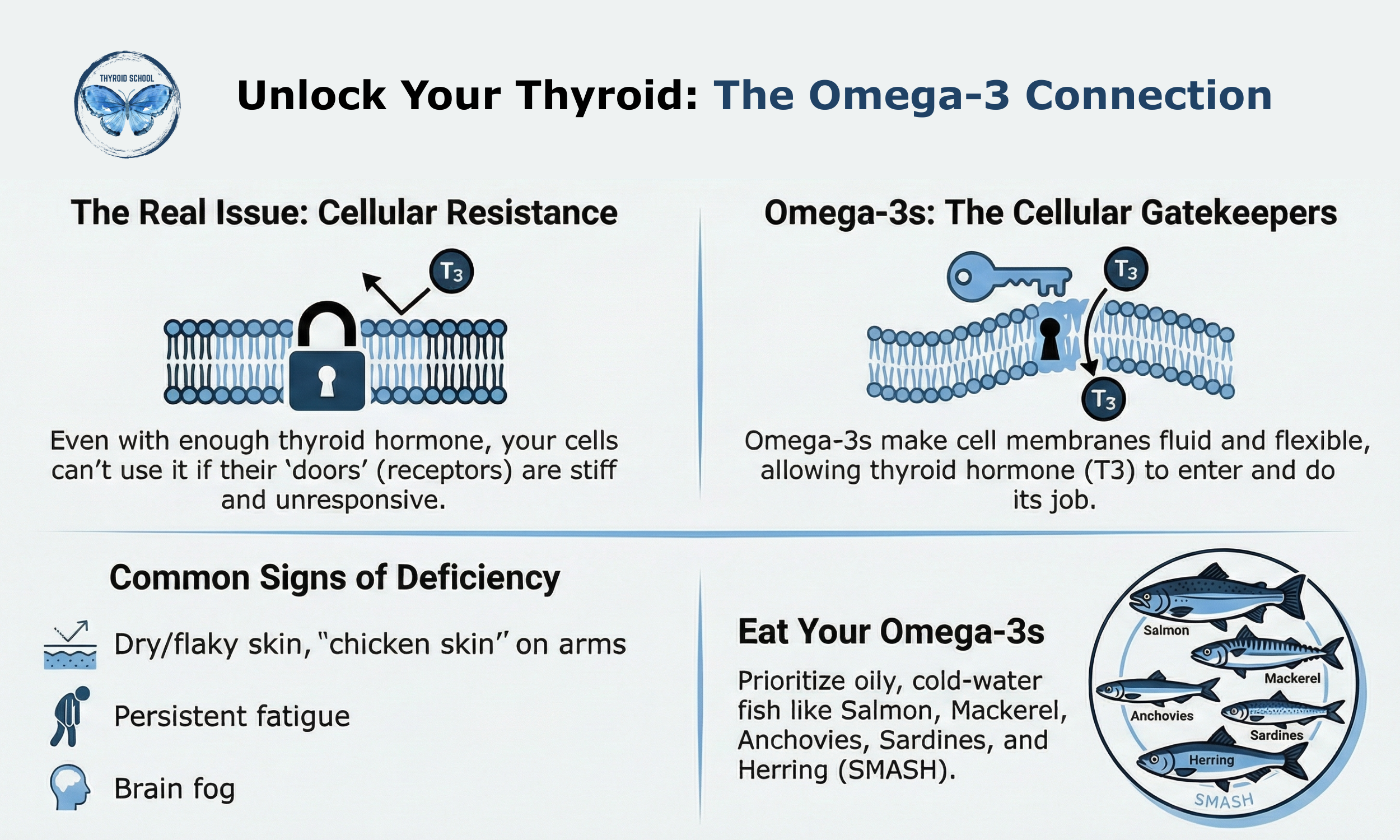
Omega-3s are directly incorporated into the phospholipid bilayer of every cell membrane, making the cell membrane more fluid and flexible. This flexible structure is essential for thyroid hormones and other signalling molecules to bind effectively.
They are the direct precursors to potent anti-inflammatory molecules called resolvins and protectins. These help to shut down the body’s “internal fire alarm system” (inflammation) once a threat is cleared.
DHA is a major structural component of the brain and eyes, supporting cognitive function and visual acuity. This helps address the common symptom of "brain fog" often associated with hypothyroidism.
EPA and DHA help balance the inflammatory effects of Omega-6 fatty acids, moving the body towards a state of resolution rather than chronic systemic inflammation.
They support healthy cardiovascular function by improving endothelial function and contributing to blood pressure regulation.
Major Warning Signs of Omega-3 Fatty Acids Deficiency
A deficiency in Omega-3s can manifest in noticeable, common symptoms that are often mistakenly attributed only to thyroid issues.
Dry, flaky, and itchy skin that doesn't resolve with topical moisturisers, as cell membranes are struggling to maintain hydration and integrity.
Small, bumpy red skin texture (often called chicken skin or keratosis pilaris), typically on the back of the arms.
Persistent fatigue and poor recovery after minimal exertion indicate poor systemic efficiency and increased low-grade inflammation.
Joint stiffness and persistent discomfort as the anti-inflammatory action of the resolvins being missing.
Difficulty concentrating or brain fog, given DHA’s essential role in maintaining brain cell structure and communication.
Omega-3 Fatty Acids Deficiency in the Thyroid Pathway
This is a critical area, as Omega-3s affect the final and most important step of the thyroid process: utilisation.
Omega-3s regulate the expression of Thyroid Hormone Receptors (THR) on the cell membrane, literally influencing how many docking stations are available for the active T3 hormone.
A cell membrane rich in healthy Omega-3 fats is more fluid and sensitive, allowing T3 to enter the cell and bind to its receptor more readily.
Chronic deficiency can lead to a state known as Thyroid Resistance, where T3 is present but the cells act as though it is not, causing classic hypothyroid symptoms despite seemingly normal blood tests.
They help to balance the systemic inflammation that drives the production of Reverse T3 (rT3), which is the body’s Cell Door Guard that keeps active T3 from entering the cell when the body is under acute stress.
The anti-inflammatory effects of Omega-3s are vital for supporting the liver enzymes that govern the conversion of inactive T4 to active T3.
Causes of Omega-3 Fatty Acids Deficiency
A deficiency is rarely a single-point failure; it is usually due to a combination of modern lifestyle factors that disrupt the system.
Dietary Imbalance: The Western diet is typically very high in pro-inflammatory Omega-6 oils (from seed and vegetable oils) and very low in Omega-3s, creating a disproportionate ratio.
Poor Conversion: Some people have genetic variations (like MTHFR) that limit the body’s ability to convert plant-based ALA (found in flaxseed) into the more active EPA and DHA.
Chronic Inflammation/Stress: High levels of chronic stress and inflammation increase the demand for Omega-3s, as the body rapidly uses them up to produce anti-inflammatory resolvins.
Malabsorption: Poor fat digestion due to low stomach acid or compromised bile flow (a liver issue) can limit the absorption of dietary fats, including Omega-3s.
Testing Omega-3 Fatty Acids
Knowing your actual levels can be a helpful, practical step in your journey as the CEO of your health.
The most useful measurement is the Omega-3 Index Test. This is a blood test that measures the percentage of EPA and DHA in your red blood cell membranes.
A low Omega-3 Index indicates poor cellular status, signalling that your cell membranes may be rigid and less responsive to thyroid hormone.
For optimal cardiovascular and brain health, an Omega-3 Index of 8% or higher is often targeted, though individual needs will vary.
While not a perfect proxy, a high-sensitivity C-Reactive Protein (hs-CRP) test may be used to assess systemic inflammation, which is often inversely related to healthy Omega-3 levels.
Daily Requirements of Omega-3 Fatty Acids
There is no single magic number for everyone, especially when dealing with thyroid conditions or autoimmunity.
The standard daily recommendation (RDA) is generally low, only aiming to prevent gross deficiency, not to achieve a therapeutic or anti-inflammatory effect.
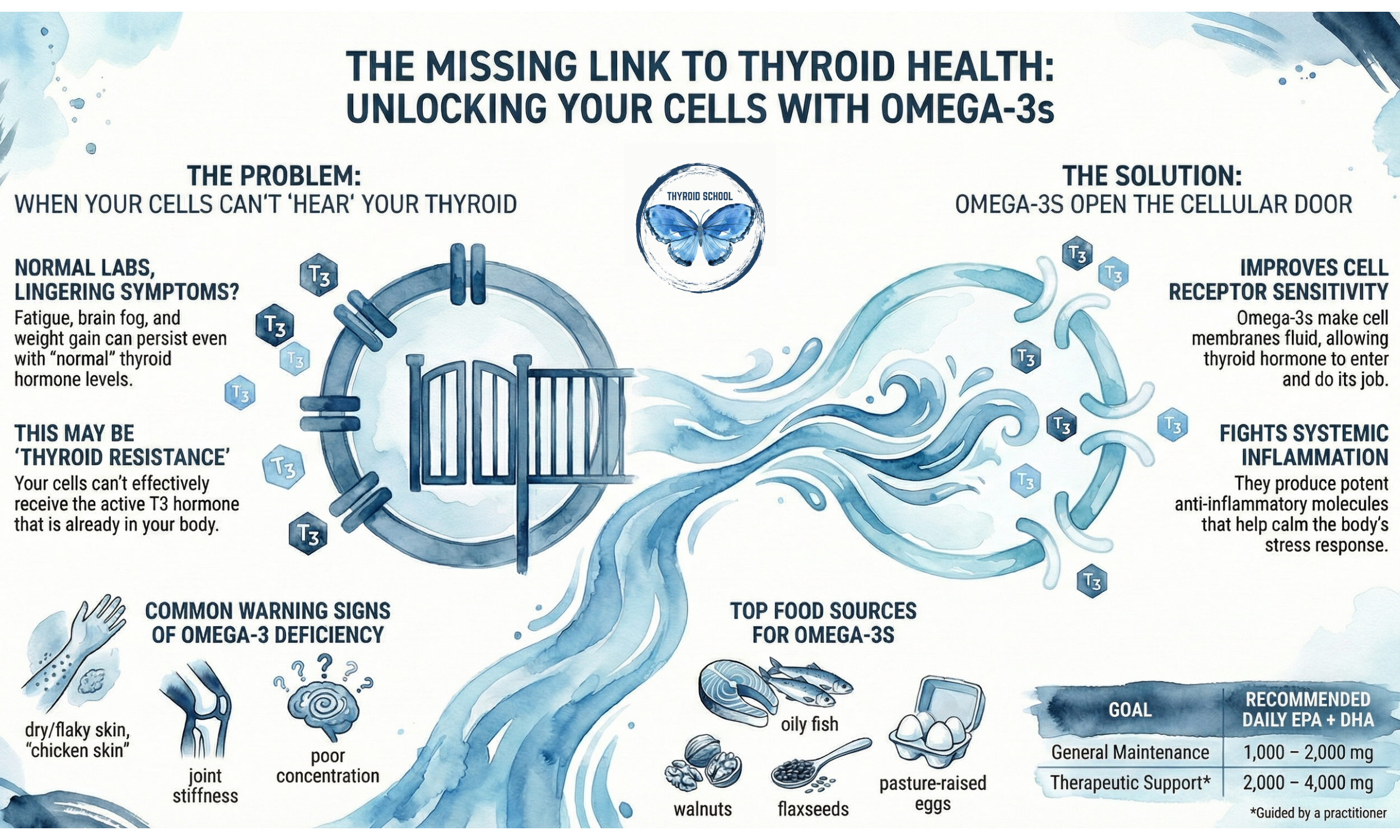
For therapeutic and anti-inflammatory support in chronic conditions like Hashimoto's, ranges of 2,000–4,000mg of combined EPA + DHA per day may be considered, but this should be guided by testing and a practitioner.
For maintenance of a healthy index, a daily intake of 1,000–2,000mg of EPA + DHA is a common and supportive goal.
Always ensure the supplement label specifies the amount of EPA and DHA, not just the total "fish oil" amount, as this is the active component.
Foods high in Omega-3 Fatty Acids
Food is always the foundation of good health.
Oily, cold-water fish are the best direct sources of pre-formed EPA and DHA: Wild-caught Salmon, Mackerel, Anchovies, Sardines, and Herring (SMASH fish).
Walnuts and Flaxseeds (ground) are excellent sources of the plant-based ALA, which the body must convert, so they are best seen as a supporting input.
Pasture-raised egg yolks and grass-fed meats contain small, variable amounts of DHA.
For those avoiding fish, algal oil is a potent, direct source of DHA.
Final Thoughts About The Thyroid and Omega-3 Fatty Acids
Understanding Omega-3s is a major step toward taking control of your health because it moves the focus from just hormone levels to the much more important issue of cellular function. If your cells cannot hear the T3 hormone, it doesn't matter how loudly your thyroid is yelling it out.
It’s about making your cells softer, more receptive, and less inflamed. This is the ultimate form of self-sovereignty. Because at the end of the day, isn’t the goal to feel well?
Disclaimer: The information provided in this article is for educational purposes only and is not intended to diagnose, treat, or cure any medical condition. Always consult with a qualified healthcare professional before making any changes to your diet, lifestyle, or treatment plan. Individual needs may vary, and what works for one person may not be suitable for another.
